
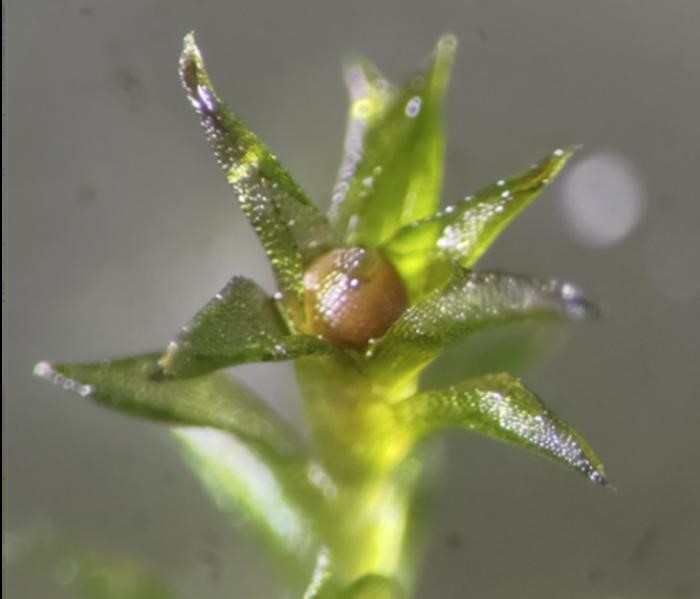
When a Tiny Plant Survived What Should Have Killed It
In the unforgiving vacuum of space, where temperatures plummet to -320°F and cosmic radiation bombards everything in its path, life as we know it should cease to exist within seconds. Yet, a humble moss defied these expectations, surviving nine months attached to the exterior of the International Space Station—and returning to Earth ready to grow.
This isn’t just a fascinating scientific curiosity. It’s a potential game-changer for humanity’s future beyond Earth.
The Experiment That Astonished Scientists
In March 2022, Japanese researchers from Hokkaido University launched an ambitious experiment. They attached sporophytes of the moss Ceratodon purpureus to the exterior of the ISS, where they would face the full brutality of space:
- Complete vacuum: No atmospheric pressure whatsoever
- Extreme temperature fluctuations: From -320°F to 131°F
- Unfiltered cosmic radiation: The kind that damages DNA at the molecular level
- Intense ultraviolet radiation: Without Earth’s protective ozone layer
For 283 days, these moss spores endured conditions that would kill most terrestrial organisms in moments.
“We expected almost zero survival, but the result was the opposite,” said lead researcher Tomomichi Fujita. “We were genuinely astonished by the extraordinary durability of these tiny plant cells.”
The results? Over 80% of the spores survived direct space exposure. Even more remarkably, approximately 90% of these survivors could germinate and grow when returned to laboratory conditions on Earth.
The Ancient Shield: 500 Million Years in the Making
How did something so small survive where most life would fail? The answer lies in evolutionary adaptations developed hundreds of millions of years ago.
When moss first transitioned from aquatic to terrestrial environments roughly 500 million years ago, it had to develop protection against Earth’s UV radiation—something water-dwelling organisms never needed. The protective structures surrounding moss spores, originally evolved to shield against Earth’s sun, proved equally effective against the far harsher radiation of space.
These structures act as microscopic radiation shields, absorbing UV photons and protecting the genetic material within. It’s an example of how evolution for one environment can unexpectedly prepare life for another—even one as alien as outer space.
Computer models based on the experiment’s data suggest these spores could potentially survive up to 15 years in space, far longer than the initial nine-month test period.
From Curiosity to Colonization Technology
This discovery has profound implications for space colonization. Here’s why moss could become one of humanity’s most valuable allies in establishing extraterrestrial settlements:
Minimal Resource Requirements
Unlike complex plants, moss requires almost no soil. It can extract nutrients directly from rocks through a combination of acids and physical penetration—perfect for resource-scarce environments like Mars or the Moon.
Atmosphere Production
Through photosynthesis, moss converts CO2 into oxygen. In enclosed habitats or eventually in terraforming efforts, moss could be an early-stage oxygen producer, helping to create breathable atmospheres.
Soil Creation
Moss is a pioneer species on Earth, breaking down rock surfaces and creating the foundation for more complex ecosystems. On Mars, it could perform the same function, gradually building soil from Martian regolith.
Radiation Resistance
The same adaptations that allowed survival in space could help moss thrive in the high-radiation environments of Mars or lunar colonies, where shielding is limited.
Durability During Transit
Perhaps most practically, moss’s ability to survive in dormant form means it could be transported to other worlds without complex life support systems, reducing mission costs and complexity.
The Bigger Picture: Life’s Resilience
“This study demonstrates the astonishing resilience of life that originated on Earth,” Fujita noted. “At the cellular level, life possesses intrinsic mechanisms to endure the conditions of space.”
This research fits into a growing body of evidence suggesting life is far more robust than we once believed. Tardigrades (water bears) can survive space exposure. Bacteria have been found thriving in extreme environments from Antarctic ice to deep-sea volcanic vents. Some microorganisms can even survive the intense radiation near nuclear reactors.
The implications extend beyond practical applications. If Earth life can survive in space more readily than expected, it raises intriguing questions:
- Could life transfer between planets naturally via meteorite impacts (panspermia)?
- Might we find Earth-like extremophiles on Mars, having arrived via ancient asteroid collisions?
- Are the conditions necessary for life less restrictive than we’ve assumed?
Next Steps: From Laboratory to Lunar Greenhouse
The research team isn’t stopping at the ISS. Future experiments will test:
- Longer exposure periods: Can moss survive years or decades in space?
- Direct colonization: Can moss grow directly on lunar or Martian regolith simulants?
- Genetic modifications: Can we enhance moss’s already impressive survival capabilities through synthetic biology?
- Ecosystem building: How quickly can moss-based systems support more complex plants?
Several space agencies and private companies are already exploring bioregeneration systems for long-duration missions. The European Space Agency’s MELiSSA project aims to create closed-loop life support using plants and microorganisms. NASA’s VEGGIE experiments grow fresh vegetables aboard the ISS. This moss research provides another tool for these ambitious efforts.
The Green Future of Space Exploration
As we stand on the threshold of becoming a multi-planetary species, we’re discovering that nature has already solved many of the problems we face. The same moss that grows on rocks in your backyard might one day carpet the first Martian greenhouses, producing oxygen, building soil, and creating the foundation for more complex ecosystems.
It’s a reminder that in our rush to develop cutting-edge technology for space exploration, some of our most valuable tools might be the ones that evolution has been perfecting for hundreds of millions of years. Sometimes, the most advanced technology is life itself.
The tiny moss that survived nine months in the void of space isn’t just a scientific curiosity—it’s a pioneer, blazing the trail for life beyond Earth. And it’s showing us that the future of space colonization might be greener than we ever imagined.
The research discussed in this article was conducted by Hokkaido University and published following the completion of a nine-month experiment aboard the International Space Station from March 2022 to January 2023.
@ImageCredits: Tomomichi Fujita